From a slow leak behind the drywall to a full basement flood, Los Angeles property owners call Aqua Guard Water Damage because we show up with the right gear the first time — no guesswork, no upsells at the door.
Call +1-844-578-1604 Now
Our Los Angeles technicians hold IICRC water restoration certifications and carry that training into every job, from a Category 1 clean-water leak to a Category 3 sewage backup. We're not a call center routing you to a random subcontractor; we're the crew that shows up.
Every technician on our Los Angeles roster is background-checked, licensed, and insured, and every truck is stocked with commercial-grade air movers, low-grain-refrigerant dehumidifiers, and antimicrobial treatment for contaminated water intrusion.
We invest in ongoing training as drying standards and equipment evolve, rather than treating a technician's initial certification as the finish line.

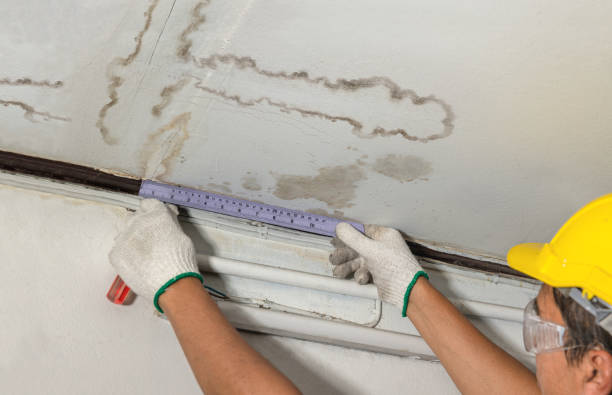
Ceiling stains near a bathroom or kitchen almost always trace back to a plumbing failure rather than a roof leak, which means the source is often closer and easier to fix than homeowners assume.
A persistent musty smell in a basement or bathroom usually means microbial growth has already started somewhere you can't see, often inside wall cavities or under flooring. Air fresheners will mask it temporarily but won't touch the actual source.
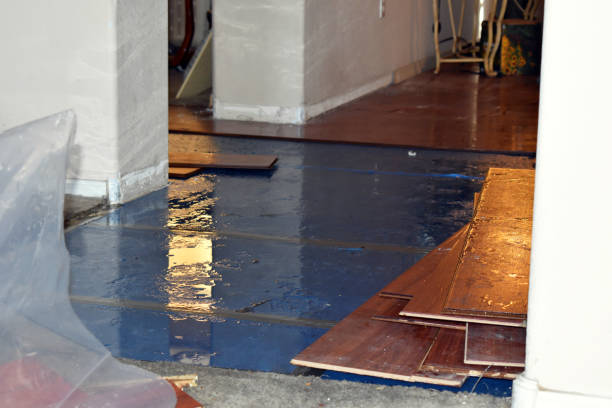
Carpet that stays damp or squishy days after you last noticed water is holding moisture against the subfloor, which is exactly the condition that lets mold take hold underneath.
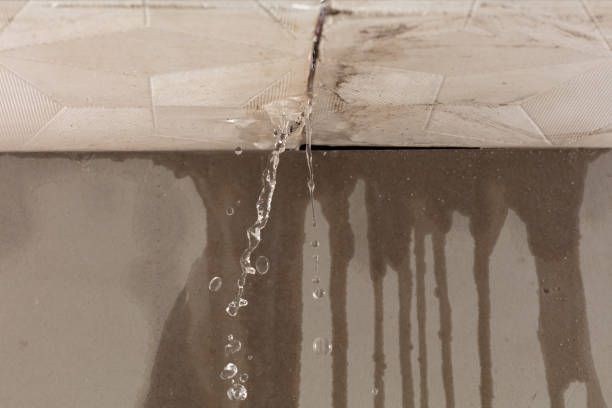
An unexplained jump in your water bill is frequently the first sign of a slab leak or a failing supply line long before any visible water appears. Catching it at this stage is far cheaper than waiting for a visible flood.
Bubbling near a window or exterior wall frequently points to a flashing or seal failure letting water into the wall cavity a little at a time.
Mold that returns after cleaning with bleach is a sign the underlying moisture source was never addressed, since surface cleaning does nothing for saturated material behind the wall.
We treat Water Removal as one continuous job rather than a series of handoffs — the crew that extracts the water is accountable for the drying results, and the drying results determine what reconstruction is actually needed.
Standing water gets removed with commercial extraction equipment first, then we run moisture readings across every affected surface so the drying plan targets what's actually still wet, not what looks dry on the surface.
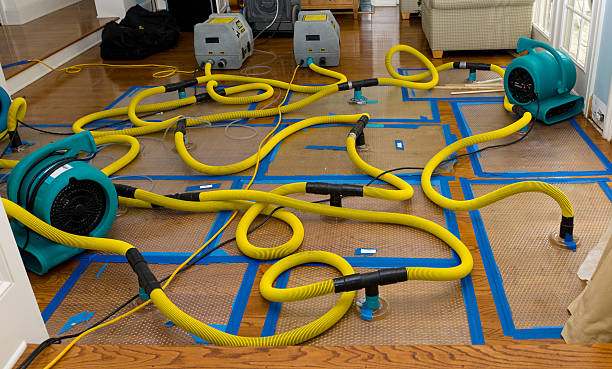
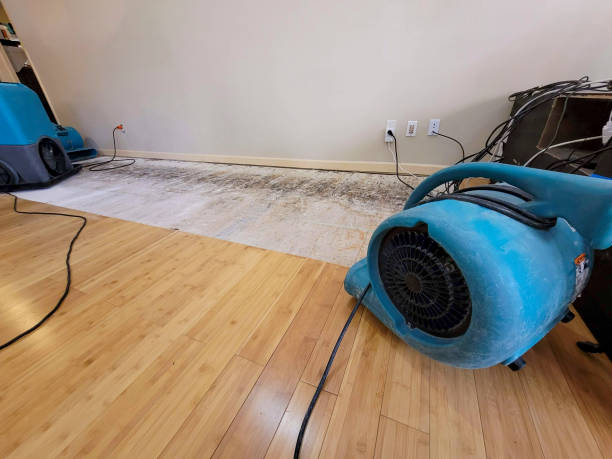
We place industrial air movers and low-grain-refrigerant dehumidifiers based on psychrometric readings, then log moisture levels daily until every affected material returns to a safe drying standard.
Our sewage cleanup protocol follows IICRC S500 contamination standards, isolating the affected area, removing unsalvageable materials, and disinfecting every surface that had contact with blackwater.
Because mold can establish in as little as 48 hours, our drying timeline is built around beating that window rather than treating mold prevention as an afterthought.
Once the structure tests dry, our reconstruction team handles drywall, insulation, flooring, and trim so you're not managing a second contractor after the restoration crew leaves.
Specialized cleaning techniques can often save upholstery, electronics, and documents that look like a total loss at first glance, which keeps out-of-pocket replacement costs down.


A real person answers, gathers the details of your water loss, and routes the closest available crew immediately.
The assessment sets the entire plan — skipping it or rushing it is how jobs end up with hidden moisture pockets months later.
Extraction and drying run as one continuous process rather than two separate visits, which keeps the timeline tighter.
Once moisture readings confirm the structure is dry, we hand you documentation and move into any needed reconstruction.
Insurance and licensing aren't just paperwork here — they're what let us stand behind the work if something doesn't go as planned.
Trucks are staged regionally so a crew can typically reach you well before a national chain's call center even finishes your intake form.
You get a written estimate before work begins, not a surprise invoice after the drying equipment is already running.
If a drying target isn't met on the first pass, we extend equipment placement at no extra charge until moisture readings confirm the structure is dry.
We'd rather run drying equipment an extra day at our own cost than close out a job with a moisture reading we're not confident in.
Our technicians don't get paid faster by closing jobs early, which keeps the incentive aligned with actually finishing the drying properly.
Call +1-844-578-1604Our Los Angeles coverage area spans 90291 90293 90292 91316 91311 90035 90034 90037 90031 90039 90008 90004 90005 90006 90007 90001 90002 90003 91504 90710 90089 91306 91344 91345 91340 91342 91343 90036 90247 90248 91436 91371 91608 91605 91604 91607 91606 91601 91602 90402 90068 90069 90062 90063 90061 90066 90067 90064 90065 91326 91324 91325 90013 90012 90011 90010 90017 90016 90015 90014 90019 90095 90094 91042 91040 91411 91352 91356 90041 90042 90043 90044 90045 90046 90047 90048 90049 90018 91423 90210 91303 91304 91307 90079 90071 90077 91331 91330 91335 90026 90027 90024 90025 90023 90020 90021 90029 90272 90732 90731 90028 90230 91406 91405 91403 91402 91401 91367 91364 90033 90032 90038 90057 90052 90059 90058 90744 90501 90502 90009 90030 90050 90051 90053 90054 90055 90060 90070 90072 90074 90075 90076 90078 90080 90081 90082 90083 90084 90086 90087 90088 90093 90099 90134 90189 90213 90294 90295 90733 90734 90748 91041 91043 91305 91308 91309 91313 91327 91328 91329 91333 91334 91337 91346 91353 91357 91365 91392 91393 91394 91395 91396 91404 91407 91408 91409 91410 91412 91413 91416 91426 91470 91482 91495 91496 91499 91603 91609 91610 91611 91612 91614 91615 91616 91617 91618 90022 90040 90056 90073, with trucks positioned to reach any address in the service radius quickly.
We track call volume by zip code across Los Angeles to keep crew staffing matched to where emergencies actually happen most often.

"The team here in Los Angeles treated our emergency like it actually mattered, not like another ticket in a queue, and the drying documentation they left us was thorough enough to hand straight to our insurer."
James R., Los Angeles"What impressed me most was the daily moisture log — I could actually see the numbers improving instead of just being told to trust the process."
Denise M., Los Angeles"Professional from the first phone call to the final walkthrough. They re-tested moisture levels before closing the job instead of just eyeballing it."
Marcus T., Los Angeles"Every question I asked got a straight answer, even the ones about cost, which is rare after dealing with two other contractors who kept dodging the pricing conversation."
Priya S., Los Angeles"We had a slow leak we didn't notice for weeks and the crew found moisture in places we never would have checked using thermal imaging."
Carlos V., Los Angeles"They minimized business disruption by sectioning off the wet area instead of shutting down the whole space during drying."
Angela F., Los Angeles"A cracked supply line under the kitchen sink went unnoticed for days and by the time we called, the subfloor was saturated. The crew pulled the damaged material and had drying equipment running within the hour."
Tyrone B., Los Angeles"Storm runoff got into our crawl space and the smell alone told us something was wrong. The crew found the vapor barrier had failed and fixed the actual cause, not just the symptom."
Wendy K., Los Angeles